
Except in the classic domain name TLDs like .com, .net and .org, the price you pay to register a domain in year one is rarely the price you pay to keep it.
Renewal pricing is set separately by the registry and the registrar, and on premium names it can be many times higher than the standard rate.
Knowing the renewal cost up front helps you budget, avoid surprise bills, and pick the right domain in the first place.
What "renewal cost" actually means
A domain has three prices that matter on day one.
The registration price is what you pay the first year.
The renewal price is what you pay every year after that.
The transfer price is what you pay if you move the domain to a different registrar, which usually adds one year to the registration period.
These three prices are usually similar on common TLDs like .com, .net, and .org. They can be very different on newer or specialty TLDs, and they are almost always different on premium domains.
Why standard and premium domains are priced differently
Most domains use the registry's standard wholesale price. Your registrar adds a small markup and that becomes your renewal price. Standard renewal prices for a TLD are public and stable.
A premium domain is a name the registry has flagged as more valuable. Its registration and renewal prices are set per-name by the registry, not per-TLD.
A premium .bet or premium .xyz renewal can cost hundreds or thousands of dollars per year.
The price is the price every year, not just year one. Always check the renewal price before you register a premium name.
How TLD choice changes the math
Different TLDs use different pricing tiers. Legacy TLDs like .com and .org are inexpensive and stable.
Newer gTLDs sometimes have very low first-year promo prices and much higher renewals.
Country-code TLDs each have their own rules and currencies.
If renewal cost matters to you, look at the renewal column, not the registration column.
A $1.99 first-year price with a $59 renewal is not a good deal if you plan to keep the domain.
Using the Domain Renewal Cost Checker
Open the Domain Renewal Cost Checker and enter the domain you are evaluating.
The tool returns the registration, renewal, and transfer prices for a one-year term, and flags premium names with their full premium pricing.
The tool shows typical retail-range pricing. Checkout totals vary slightly by registrar.
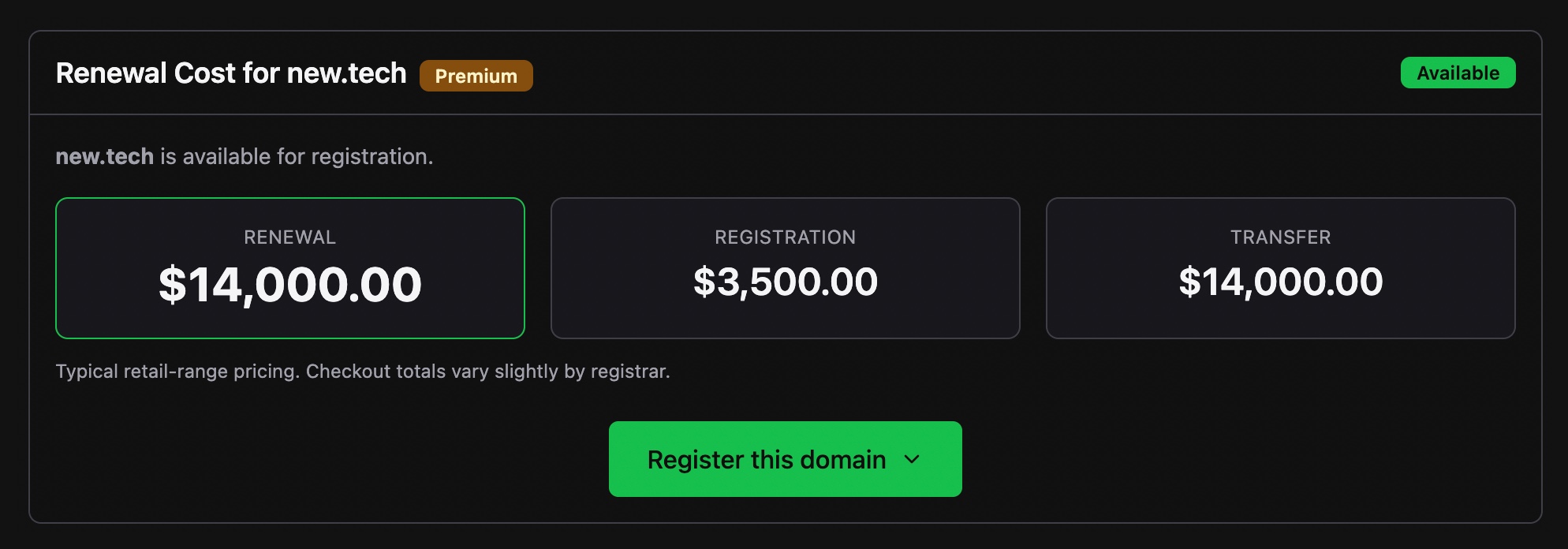
A few quick rules of thumb:
- Budget for that renewal every year.
- If renewal is much higher than registration, decide if you really plan to keep the domain long term.
- If the domain is registered already, the prices shown are still useful as a fair-market reference for renewals or transfers.
- Use the WHOIS Lookup tool next if you want to see who owns the domain and when it expires.
Closing thoughts
Renewal pricing is the part of domain ownership most buyers ignore until the second-year invoice arrives.
Spending five seconds in the checker before you buy a name saves a lot of regret later, and it gives you a fair price to compare across registrars.